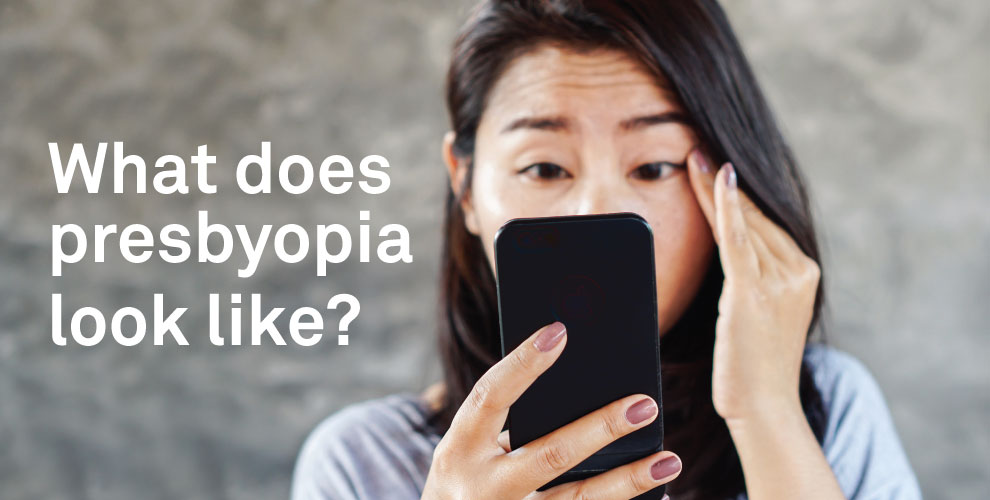
As people age, they often find themselves struggling to see up-close objects or reading material. This farsightedness, or presbyopia, is a natural part of the aging process that becomes an annoyance when trying to read a restaurant menu, view a road sign, or sew a button on a shirt. If you think you might need reading glasses, here are few ways to diagnose this condition:
Simple Reading Glasses Tests
Reading Glasses and Contacts
Reading Glasses and Driving
Simple Reading Glasses Tests
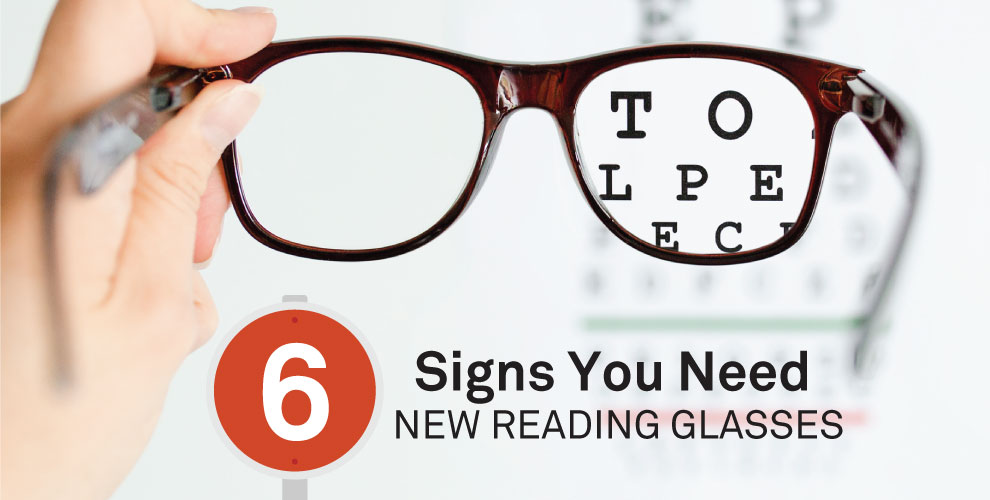
The Book Test: Holding a book farther than the normal 10 to 12 inches away from your face is a telltale sign of presbyopia. People who need reading glasses hold books an abnormal distance away so their eyes can focus on the words. When your arms seem to be too short, it is time for a pair of readers. You can also use a printable Diopter Chart to test your vision ability and to easily find your power.
The Task Test: Besides difficulty reading, if you struggle with up-close tasks such as sewing, drawing, or playing board games, it is likely you need reading glasses. Another sign is if you have difficulty at dinnertime seeing the food on your plate.
The Headache Test: If you find yourself getting headaches and your eyes are tired after trying to focus on an up-close object, this could be your body’s way of telling you your eyes are strained and need reading glasses. A good pair of full frame reading glasses or half frame reading glasses will relieve these uncomfortable symptoms.
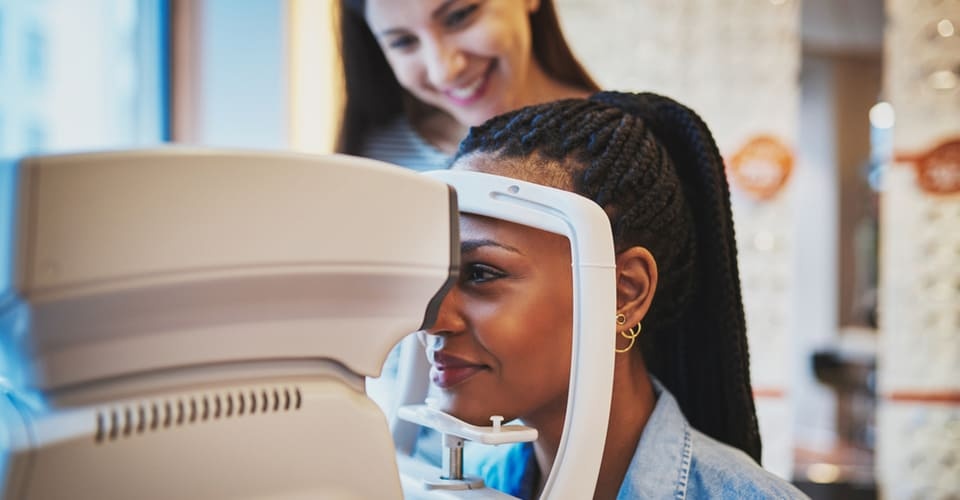
The Eye Exam: The most reliable way to decide if you need reading glasses is to visit your optometrist who will perform some tests to see if your vision needs correction. If the results of your appointment reveal a need for readers, you can purchase them from your eye doctor, a pharmacy, a retail store, or you can buy reading glasses online. Any of these routes should provide you with a great selection to accommodate your change in eyesight.
Reading Glasses and Contacts

-If you have been nearsighted for most of your life and use contact lenses to correct this, it can be discouraging when your 40s hit and your contact lenses no longer suffice for all your vision needs. Suddenly, reading up-close material becomes difficult, and wearing reading glasses over your contacts seems to be your only option. Many people who have contacts to correct nearsightedness wonder if it is safe to wear readers in addition to their contacts.
-To answer this question, in most cases it is fine to wear full frame reading glasses or half frame reading glasses with contacts, as no scientific research has proven it detrimental to one’s eye health. Many people prefer to have both eyes corrected via contact lenses for distance vision and to wear reading glasses over contact lenses in cases where near vision correction is needed.
-For the individual who wears contact lenses for distance vision and reading glasses for up-close vision, it it beneficial to have a pair of bifocal reading glasses on hand. Bifocal readers have two prescriptions within each lens to correct both your distance and close vision problems. Bifocal reader glasses are great for the day when your eyes are too tired for contact lenses.
Resources on Reading Glasses and Contacts
Reading Glasses and Driving

-As reading glasses are intended to treat presbyopia, a condition of the eye in which it can no longer change focus to view near objects, full frame reading glasses should not be worn while driving. Full frame, single vision readers can be hazardous while driving.
-Full frame reading glasses are meant to help achieve clarity in viewing objects that are no further than an arms-length away. Driving inherently involves viewing objects further than this distance, so reading glasses thus have no use for a driver.
-If you need glasses to see the dashboard, but have good distance vision, you might consider wearing half frame reading glasses that sit on the end of your nose. These will give you the up-close vision you need, while not obstructing your distance vision.
-If you need glasses to see the dashboard, as well as far away, bifocal reading glasses are a better option. With bifocal readers, the top of the lens corrects distance vision, and the bottom part of the lens helps those with presbyopia.
-There are different types of bifocal glasses available, and you may want to try a couple kinds to determine the variety that helps you see both the dashboard and the road clearly and safely. Regular, lined reading bifocals will have a visible line between the two prescriptions, and some people find it hard to adjust to the abrupt change in prescription while driving.
-If you have difficulty with lined bifocals, no line bifocal reading glasses might be for you. Sometimes known as progressive lenses, these glasses do not have the visible line between prescriptions. Some say these are easier to adapt to because they do not have the abrupt jump between prescriptions.
-It is good for your eye health to have a pair of bifocal sunglasses in the car for bright, sunny driving conditions. Bifocal reader sunglasses have the same properties as regular bifocals, in terms of having a near and far prescription. What makes reader sunglasses different is their tinted lenses that block harmful UV rays. This protects your eye health and makes seeing in bright conditions easier.
Resources on Reading Glasses and Driving